Cosmetic Concerns / Leg Veins

Leg Veins

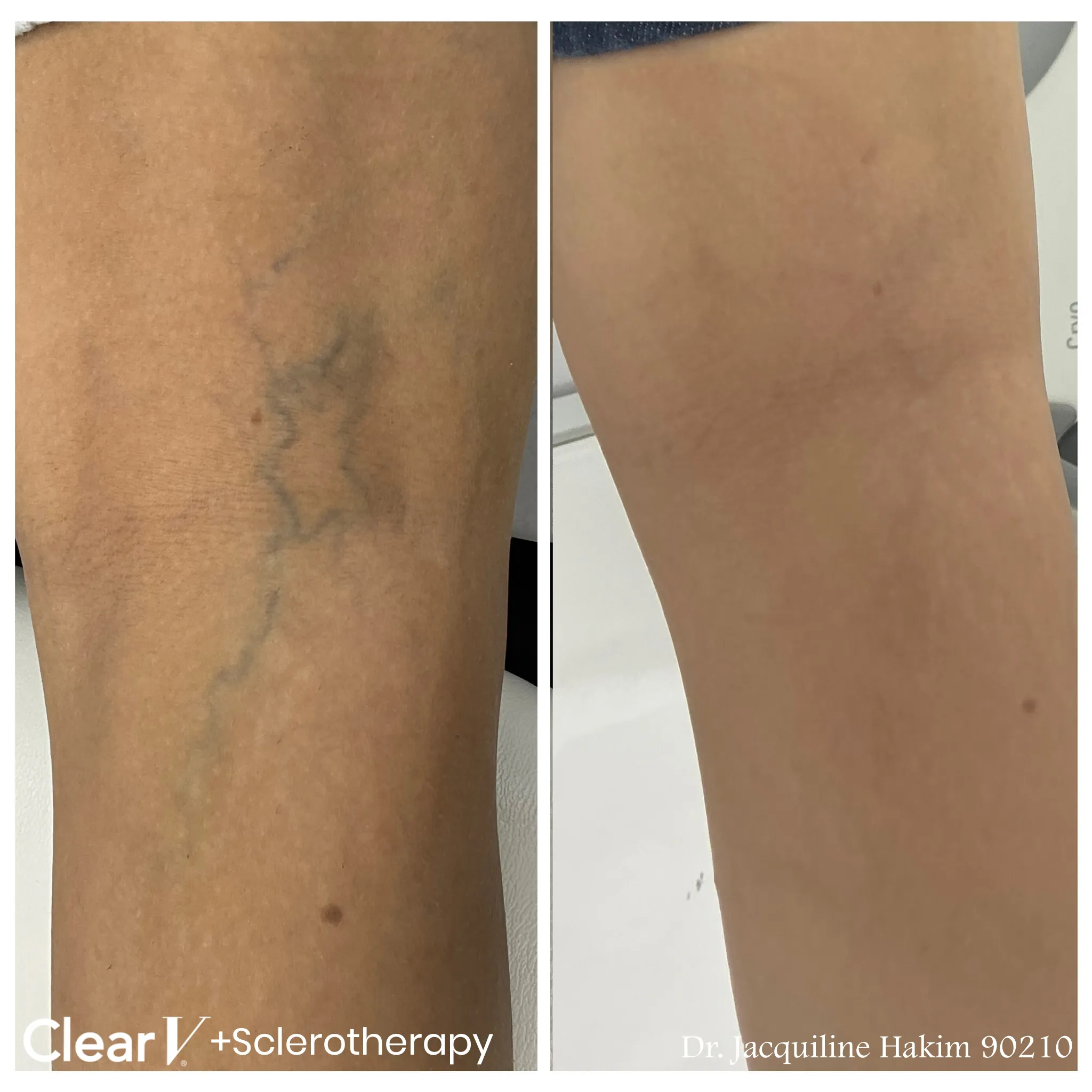
Visible leg veins vary in size, color, and type, so treatment is tailored to the specific veins present. Vascular laser treatments and injectable vein treatments may be used alone or together to effectively target different types of visible veins.
Treatment

ClearV

1064 nm vascular laser
Treatment Plan
1–3 treatments
Initial Results
2–6 weeks
full Results
1–3 months
Social Downtime
0–1 day

Recommended pathway

The Combination Plan for Leg Veins

Leg vein treatment is selected by vessel type rather than by a single default device. ClearV leads for visible red and purple vessels. Sclerotherapy leads for larger or more persistent spider and reticular veins. Where both are present, which is common, the two are sequenced together across a short series.
LEAD TREATMENT
01

lead treatment

ClearV

Category
Vascular Laser · Laser & energy
Mechanism
A 1064 nm Nd:YAG wavelength delivers precise vascular energy to visible red and purple leg veins, heating each vessel until it closes and fades from view. Nothing is injected, and nothing is cut, which is what makes it well suited to the fine surface threads where precision matters more than reach.
Treatment
Sclerotherapy
Treatment Plan
2–3 treatments
Initial Results
3–6 weeks
full Results
3–4 months
Social Downtime
None
LEAD TREATMENT
02

lead treatment

Sclerotherapy

Category
Injectable Vein Treatment · Body
Mechanism
Targeted injections close spider and reticular veins, allowing blood to naturally reroute through healthier vessels as the treated veins gradually fade over the following weeks. Sclerotherapy is considered a gold-standard treatment for many visible leg veins, particularly larger vessels that may respond less effectively to surface laser treatments.
SUPPORTING TREATMENT
03

Supporting Treatment

Dilated Capillary Treatment

Category
Vascular Spot Treatment · Laser
Mechanism
Targeted spot treatment for individual visible vessels and thread veins, applied vessel by vessel where precision matters more than overall coverage.
Role
Focal cleanup. Used for the few threads still visible once the main series is complete, rather than as a treatment for clustered veins.
More About Dilated Capillary Treatment
Divina Dermatology · Beverly Hills

Experience Refined Cosmetic Dermatology

Schedule Your Custom Consultation Today

Leg veins are evaluated by vessel type, color, and caliber. A consultation with Dr. Hakim or Dr. Kwan determines whether ClearV, sclerotherapy, or a combination of the two should be used.

436 N. Bedford Drive, Suite 303
Beverly Hills, CA 90210

Physician-Led Laser Expertise

Preceptor & National Trainer

Sciton Preceptor

Clear V and Sclerotherapy Expertise Led by Sciton Preceptor Dr. Jacquiline Hakim

BEVERLY HILLS, CA

Dr. Jacquiline Hakim is a Sciton Preceptor, Sciton’s highest level of physician trainer, recognized for her expertise and extensive experience with advanced laser treatments. As a preceptor, Dr. Hakim and her facility are selected to host and train physicians from around the world, providing hands-on education in advanced treatment techniques, protocols, and patient safety.

She trains physicians on a wide range of Sciton technologies, including Erbium laser resurfacing, BBL HEROic, ClearV, ClearSilk, and more, helping other providers master these technologies and achieve safe, effective patient outcomes.
Dr. Jacquiline Hakim

Understanding the concern

Leg Veins Are Treated by Type of Vessel

Visible leg veins appear in more than one form. Fine red and purple threads sit close to the surface. Blue and blue-green reticular veins sit deeper and run wider. Most legs show both at once, which is why two people with similarly marked legs can need quite different treatment.

The type of vessel determines the approach. ClearV targets visible red and purple leg veins with precise vascular energy delivered through the skin. Sclerotherapy uses targeted injections to collapse larger or more persistent spider and reticular veins. Many patients are treated with both, laser for the fine surface threads and injections for the wider vessels beneath them.

At Divina Dermatology & Cosmetic Center, leg veins are mapped before any treatment is planned. Dr. Hakim assesses vessel color, caliber, and distribution across both legs, and considers skin tone, tanning history, and how the vessels have changed over time. The plan is built around what is actually visible rather than around a single default device.
Signs You May Be Noticing
  • Fine red or purple thread veins on the thighs, calves, or ankles
  • Clusters of spider veins that have spread over time
  • Blue or blue-green veins visible beneath the surface
  • Vessels that became more noticeable with age, pregnancy, or standing work
  • Legs you would rather cover in shorts, dresses, or swimwear
  • Veins that returned after treatment elsewhere
Leg veins are treated here as a cosmetic concern. Vessel type, skin tone, and treatment history determine whether ClearV, sclerotherapy, or a combination should lead, and we confirm suitability for cosmetic vein treatment at consultation.

Where you are in the process

Leg Veins Exist on a Spectrum

01

Early Thread Veins

A Few Fine Surface Vessels

Small red or purple threads are visible in one or two areas, often on the thigh or behind the knee. Treatment at this stage is usually short and focused, and clearing early keeps isolated vessels from developing into clusters.

Typical approach

  • ClearV for fine red and purple vessels
  • Focal capillary treatment for individual threads
  • Sun protection and maintenance review
02

Moderate Spider Veins

Visible Clusters and Mixed Vessel Types

Spider veins have spread into clusters, and wider blue or reticular vessels are visible alongside them. This is the core pathway. ClearV and sclerotherapy are used together, each on the vessels it suits.

The combination pathway

  • ClearV as the lead for red and purple vessels
  • Sclerotherapy as the lead for larger spider and reticular veins
  • Focal capillary treatment for residual threads
  • Sessions staged across both legs
03

Advanced or Recurrent Veins

Dense Networks or Veins That Have Returned

Vessels are extensive, long-standing, or have recurred after previous treatment. Planning takes longer, the series runs longer, and a clinical evaluation precedes any cosmetic work.

Options discussed at consultation

  • Sclerotherapy series staged across sessions
  • ClearV for surface vessels between sessions
  • Clinical evaluation and referral where appropriate

Your treatment journey

Leg Veins Clear Across
a Staged Series

Week 0 — Week 1
Week 4–8
Month 3–6
Vein Mapping and Evaluation;
First Treatment
Treatment Continues
Review and Maintenance
Vessel color, type, and density are mapped across both legs. Skin tone, treatment history, and suitability for cosmetic vein treatment are reviewed before a device or injectable is selected.
Sclerotherapy addresses larger spider and reticular veins, or ClearV leads where vessels are fine, red, and close to the surface. Compression may be advised after injection sessions.
ClearV and sclerotherapy treatment is repeated as necessary.
Appearance of veins is reassessed once treated vessels have fully faded. Residual or newly visible vessels are treated focally, and a maintenance interval is set.

What patients ask

Common Questions

Leg vein consultations usually focus on which treatment suits which vessel, how many sessions to expect, recovery, and whether veins return. These are the questions patients ask most often.

Request Appointment

What Is the Difference Between ClearV and Sclerotherapy?

Vessel type. ClearV targets visible red and purple leg veins with precise vascular energy delivered through the skin. Sclerotherapy uses targeted injections to collapse larger or more persistent spider and reticular veins. Which one leads is decided by mapping the vessels at consultation, and many patients need both, because most legs present with more than one vessel type.

How Many Sessions Are Typical?

Most patients complete two to four sessions spaced about four weeks apart. Vessel density, caliber, and how the legs respond to the first session all affect the final number.

How Long Until Leg Veins Disappear?

Legs clear more slowly than the face. Treated vessels typically fade over six to sixteen weeks, and denser vessels may need a second pass before they clear completely.

Is There Downtime?

Usually very little. Bruising, mild swelling, or temporary discoloration at treated sites is common and settles over days to weeks. Compression is often advised after sclerotherapy, and sun exposure is limited on treated legs while they heal.

Will Leg Veins Come Back?

Treated vessels do not return, but new ones can form over time. The tendency toward visible leg veins is largely genetic and is influenced by pregnancy, hormones, standing work, and age, so occasional maintenance sessions keep the result consistent.

Can Leg Veins Be Treated In Summer?

They can, though treated legs need sun protection while they clear and compression is more comfortable in cooler weather. Many patients start in fall or winter so the legs are ready by the time they are uncovered.

What patients also address

Related Concerns

contact

Ready to experience a more refined, expert approach from the best dermatologist in Beverly Hills?