
Our Approach to Alopecia Treatment
Alopecia is a general term for hair loss that can affect the scalp, eyebrows, eyelashes, and other areas of the body. Hair loss can occur for many different reasons, including genetics, hormonal changes, autoimmune conditions, stress, medications, nutritional deficiencies, and physical or chemical damage to the hair follicles. Common forms include androgenetic alopecia, alopecia areata, telogen effluvium, traction alopecia, and cicatricial or scarring alopecia.
Because effective treatment depends on identifying the underlying cause, our board-certified dermatology team begins with a comprehensive evaluation of your scalp, hair loss pattern, medical history, and treatment goals. Depending on your diagnosis, treatment may include topical or oral medications, corticosteroid injections, PRP hair restoration, or advanced non-invasive hair restoration technologies such as Alma TED.
Why Patients Choose Our Alopecia Treatment
- Personalized treatment based on the underlying cause of hair loss.
- Treatment options for multiple types of alopecia.
- Support for thinning hair, excessive shedding, and progressive hair loss.
- Advanced treatments including PRP and Alma TED when appropriate.
- Prescription topical and oral medications when indicated.
- Ongoing monitoring to evaluate hair growth and treatment response.
- Care from experienced board-certified dermatologists.


How Alopecia Treatment Works
Because hair loss can have many different causes, treatment begins with a thorough dermatologic evaluation. Your dermatologist will examine your scalp and hair, review your medical history, and assess your pattern of hair loss to determine the most appropriate treatment approach.
Depending on your diagnosis, treatment may include topical minoxidil to support the hair growth cycle, oral medications such as finasteride for appropriate patients with androgenetic hair loss, or corticosteroid injections for certain forms of alopecia areata. PRP uses concentrated growth factors derived from your own blood and injects them into targeted areas of the scalp to stimulate hair growth.
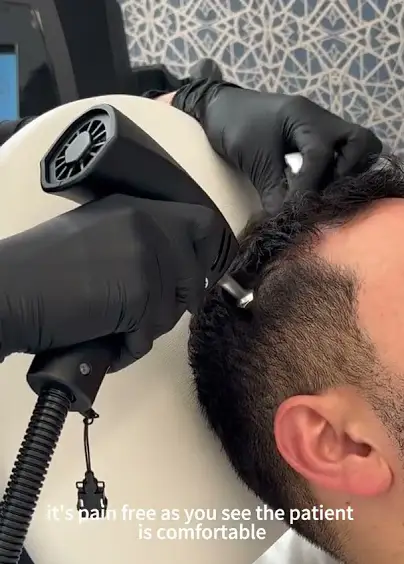
For patients seeking a non-invasive option, Alma TED uses radiofrequency energy and specialized transdermal delivery technology to support scalp health and hair density. The treatment is designed for patients experiencing thinning hair or early-stage hair loss and requires no needles or downtime. The practice recommends an initial series of three treatments followed by maintenance sessions.
When Should Alopecia Treatment Be Considered?
Alopecia treatment may be considered whenever hair loss is becoming noticeable, progressing, or affecting your confidence. Early evaluation can be particularly important because certain forms of hair loss may become more difficult to reverse when treatment is delayed.
You should schedule a dermatology evaluation if you notice:
- Increased hair shedding or thinning
- A widening part or receding hairline
- Bald patches developing on the scalp
- Sudden or rapid hair loss
- Hair loss involving the eyebrows or eyelashes
- Scalp irritation, inflammation, scaling, or pain accompanying hair loss
- Hair loss following significant stress, illness, or hormonal changes
- Hair loss caused by tight hairstyles or repeated tension
What to Expect During Treatment
Before Your Treatment
- Review of your medical history and hair loss concerns.
- Comprehensive examination of your scalp and hair.
- Evaluation of your hair loss pattern and progression.
- Discussion of previous treatments and their results.
- Identification of potential underlying causes.
- Development of a personalized treatment plan.
During Your Treatment
- Your dermatologist selects treatment based on your specific type of alopecia.
- Recommended medications or procedures are administered according to your treatment plan.
- PRP may be injected into targeted areas of the scalp when appropriate.
- Alma TED provides a non-invasive option without needles or downtime.
- Treatment progress is monitored and adjusted as your hair responds.
After Your Treatment
- Hair growth typically develops gradually rather than immediately.
- Consistent treatment is important for maintaining and improving results.
- Alma TED allows patients to return to normal activities the same day.
- Follow-up appointments monitor hair density, shedding, and treatment response.
- Maintenance treatments may be recommended depending on the treatment approach.
- Long-term management may be necessary for chronic or hereditary forms of hair loss.