Most people can point to the exact spot that bothers them in the mirror. Maybe it’s the fine lines around your eyes, the marks left behind by old breakouts, or a rough patch of sun damage that makeup no longer hides. Laser resurfacing can address all three, and the erbium laser stands out for how precisely a physician can control it.
Recent studies find that erbium lasers improve acne scars by rebuilding collagen and offer a gentler approach with a lower risk of lingering dark spots than carbon dioxide lasers. Sciton’s Resurfacing Perfected family puts that erbium technology to work at depths ranging from a quick polish to a full renewal.
Read on to learn how each treatment works, what recovery involves, and how to find laser skin resurfacing in Beverly Hills that fits your skin and your busy schedule.
Sciton’s Resurfacing Perfected Treatment Family
Resurfacing Perfected is a group of Sciton laser treatments that all use a 2940 nm erbium laser, also called an erbium YAG laser. Water in your skin absorbs this wavelength very well, so the laser removes thin, controlled layers of damaged skin while sending very little heat into the surrounding tissue. Your body responds by building fresh collagen and replacing the treated layers with smoother, more even skin.
The biggest advantage is control. Dermatologists can treat only the outermost layer for a quick refresh or go much deeper to soften etched wrinkles and scars. That range lets one technology serve a 29-year-old who wants brighter skin before a wedding and a 64-year-old who wants to repair decades of sun exposure.
If you’re still sorting out ablative, non-ablative, and fractional lasers, our guide on how to choose the right laser treatments for your skin explains each category.
How Does a Dermatologist Choose the Right Resurfacing Treatment?
An expert dermatologist will weigh the type and depth of your concern, your skin tone, how much downtime you can manage, and your long-term goals. From there, we select treatment options based on depth, surface coverage, and recovery.
- NanoLaserPeel: A very light polish that brightens dull skin, softens fine lines, and refines pores on the face, neck, chest, and hands.
- MicroLaserPeel: A slightly deeper peel that smooths rough texture, fades sun damage, and evens out skin tone.
- ProFractional: A fractional erbium laser that treats microscopic channels in a grid pattern, while leaving the surrounding skin intact. These channels can reach deep into the skin to target acne scars and deeper lines.
- Fully ablative erbium resurfacing: A more extensive full-field resurfacing option that treats the entire surface of the selected area to address deep wrinkles, advanced sun damage, and significant scarring.
The Contour TRL lets our board-certified dermatologists adjust treatment depth for each area during a single session. A common plan pairs ProFractional for scars with a MicroLaser Peel to smooth the surface, and many patients add BBL HEROic in the same visit to clear redness and brown spots.
Which Skin Concerns Respond to Erbium Laser Resurfacing?
Erbium laser resurfacing removes damaged skin and triggers new collagen at the same time, so it can improve both the color and the feel of your skin. Concerns that respond well include:
- Fine lines around the eyes and mouth
- Deeper wrinkles and crepey skin
- Acne scars, including rolling and boxcar scars
- Surgical and injury scars
- Sun damage and brown spots
- Uneven skin tone and rough skin texture
- Enlarged pores and dull, tired-looking skin
Is Erbium Resurfacing Safe for Darker Skin Tones?
A question we regularly hear is, “Will laser resurfacing work on my skin tone?” Sciton designed the Resurfacing Perfected family for all skin types, and erbium lasers create less heat in the surrounding tissue than carbon dioxide lasers, which lowers the risk of pigment changes. Medium and deeper skin tones still call for conservative settings and careful preparation before treatment.
Your physician may recommend waiting on treatment if you:
- Have an active skin infection or cold sore
- Recently finished a course of isotretinoin for acne
- Are pregnant or breastfeeding
- Have a fresh tan
How Long Is Recovery After Each Resurfacing Treatment?
Recovery depends on the depth and coverage of your treatment. Here’s what most patients can expect:
NanoPeel Laser: Mild pinkness for a day or two, with most people back at work within a few hours.- MicroLaser Peel: Redness and light peeling for four days to two weeks, depending on depth.
- ProFractional: Redness, swelling, and flaking for about a week.
- Fully ablative erbium resurfacing: One to two weeks of healing before returning to work, plus pink skin that can last six to 12 weeks as new skin matures.
Aftercare usually includes gentle cleansing, a healing ointment, strict sun protection, and follow-up visits.
How Can You Protect Your Results Over Time?
Collagen keeps building for several months after treatment, so your skin can continue to improve after the redness fades. Daily broad-spectrum sunscreen, a medical-grade skin care routine, and lighter maintenance treatments like NanoPeel Laser, Super MOXI, or BBL HEROic help your results last for years.
Where to Find Physician-Led Laser Skin Resurfacing in Beverly Hills
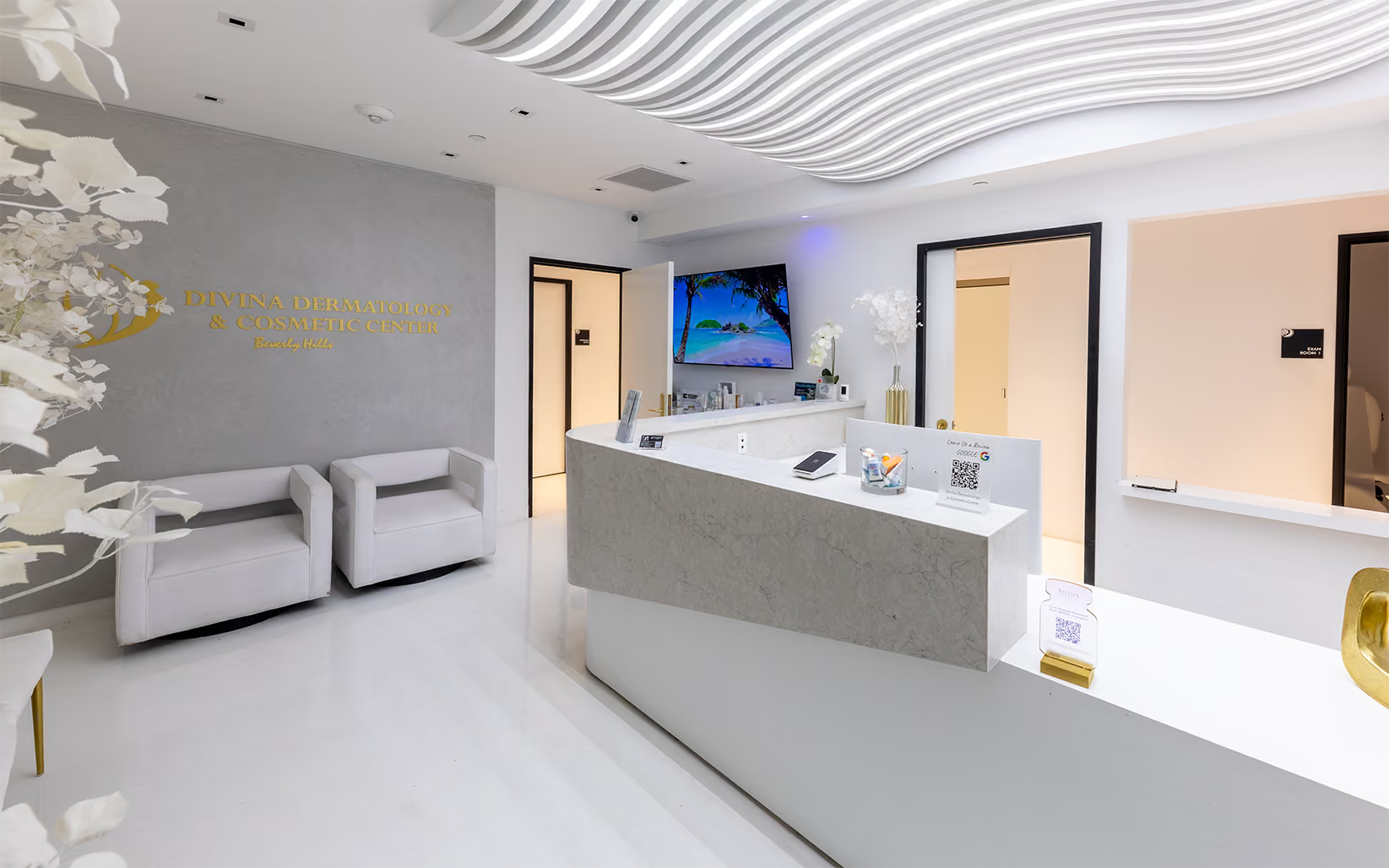
Divina Dermatology & Cosmetic Center houses the complete Sciton Resurfacing Perfected family under one roof, along with more than 20 laser and energy-based devices. Double board-certified dermatologist Dr. Jacquiline Hakim leads our team and serves as a Sciton Preceptor, Sciton’s highest level of physician trainer, teaching doctors nationwide how to use these same lasers. Board-certified dermatologist Dr. William Kwan brings more than 28 years of dermatology experience with a focus on lasers, and he helped write published treatment protocols for safely treating skin of color. Together, they choose the platform, depth, and intensity for each patient, and one of them personally performs every treatment.
Our office sits at 436 N. Bedford Drive, Suite 303, between Wilshire Boulevard and Santa Monica Boulevard, just steps from Rodeo Drive and the Beverly Wilshire Hotel. For those looking for the best laser skin resurfacing in Beverly Hills, our physicians build each plan around your skin, your goals, and your schedule.
Ready to book a private consultation and learn how laser skin resurfacing in Beverly Hills can restore smoother, clearer skin on a timeline that works for you?